


- Follow US


BCST 3351 Oval Flanges
Precision-machined BCST 3351 oval flanges in certified stainless steel – factory-direct with full traceability and fast delivery for reliable transmitter sealing.
-
Precision machining – perfect fit & seal, no installation issues
-
Superior materials – certified 316L / 304 SS for maximum corrosion resistance
-
Factory-direct value – premium quality at competitive prices
-
Rapid delivery – short lead times to keep projects on track
-
Full traceability – material & quality certifications for compliance and peace of mind
- Introduction
- Feature
- Dimension
- How to Order
Welcome to the home of superior process connection solutions. At BCST, a leading manufacturer of instrumentation components, we understand that the integrity of your entire system depends on the quality of each part. Our 3351 Oval Flanges are not just components; they are a guarantee of a secure, leak-proof connection for your pressure and differential pressure transmitters. Engineered with meticulous precision in our state-of-the-art factory, every BCST oval flange is designed to meet the rigorous demands of modern industrial environments. We leverage advanced technology and stringent quality control to deliver a product that ensures operational safety and efficiency. When you choose BCST, you are partnering with a trusted supplier committed to excellence, from the raw material selection to the final product that arrives at your facility, ensuring your operations run smoothly and without interruption.
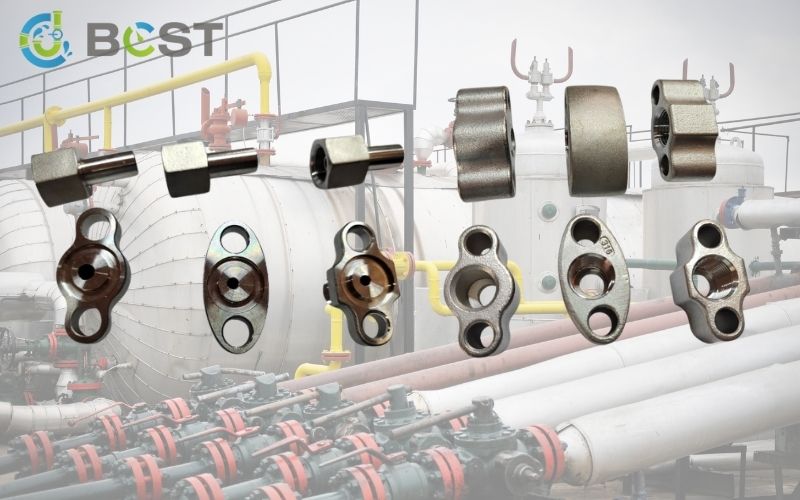
A Deep Dive into BCST 3351 Oval Flanges: Your Partner for Process Integrity
Understanding the nuances of a process connection is vital for ensuring long-term operational success. The 3351 oval flange is the critical interface between your valuable pressure transmitter and the process medium. A failure here is not just a leak; it’s a risk to safety, a loss of product, and a potential for inaccurate data that can compromise your entire process control strategy. At BCST, we don’t just sell flanges; we provide engineered solutions that fortify your operations.
Our philosophy as a premier manufacturer is built on three pillars: precision engineering, material excellence, and customer partnership. Every BCST 3351 oval flange begins its life as a block of certified high-grade stainless steel or other specified alloy in our advanced factory. Using state-of-the-art multi-axis CNC machines, we craft each flange to exact dimensional specifications. This is not just about making parts that fit; it’s about creating a sealing surface so perfect that it forms a seamless, void-free bond with the gasket and transmitter, making leaks a thing of the past.
Material science is at the heart of our advantage. We know that industrial environments can be harsh, with corrosive chemicals, extreme temperatures, and high pressures. That’s why we offer a range of materials, including the industry-standard 316L Stainless Steel for superior corrosion resistance, and can provide custom alloys for highly aggressive media. Our expertise as a factory-direct supplier means we can consult with you to select the optimal material for your specific application, ensuring decades of reliable service.
Furthermore, partnering with BCST means you gain more than just a component. You gain access to our technical support team. We provide complete documentation, including material certificates (MTRs) and certificates of conformity, ensuring you meet all regulatory and project requirements. Our products are designed for easy installation, but our team is always ready to provide guidance to ensure a perfect fit every time. This comprehensive support, combined with our competitive factory-direct pricing and swift delivery, makes BCST the most strategic choice for your 3351 oval flange needs. We are not just another vendor; we are an extension of your engineering team, committed to the integrity and success of your project.
The BCST Advantage: Unmatched Quality Control for Oval Process Flanges
At the core of every reliable process instrument is a connection that will not fail. BCST builds this reliability into every 3351 oval process flange through a rigorous, multi-stage quality control system. From the moment raw materials enter our factory, they are subject to spectral analysis to verify their composition. Throughout the CNC machining process, our technicians perform dimensional checks to ensure tolerances are met with sub-millimeter accuracy. But we don’t stop there. Each batch of flanges undergoes pressure testing and surface finish inspections to guarantee a perfect, leak-free seal. This fanatical attention to detail is why BCST holds key international certifications, including ISO 9001. When you specify BCST 3351 oval flanges, you are choosing a product that has been tested and verified to perform flawlessly under pressure, directly from a manufacturer that stands behind its work.
Fast Lead Times and Global Delivery for All 3351 Series Flanges
In today’s fast-paced industrial landscape, project delays are not an option. A long wait for critical components like 3351 series flanges can halt production and inflate costs. BCST solves this problem. As an agile and efficient manufacturer, we have optimized our entire production and supply chain to offer some of the industry’s fastest lead times. Our vertically integrated factory allows us to control every step, from material sourcing to final packaging, minimizing delays. Whether you need a standard stock order or a custom configuration, our team works diligently to ensure your 3351 oval flanges are dispatched promptly. With established logistics partners, we provide reliable global delivery, ensuring your components arrive on-site, on-time, anywhere in the world. Don’t let supply chain issues compromise your timeline. Choose BCST for the speed and reliability your project demands.




When Should You Choose an Oval Flange for Your Piping System?
Struggling with tight spaces in your piping designs? Standard round flanges are too bulky and impractical. An oval flange might be the compact, reliable solution you have been searching for.
Choose an oval flange when you need a strong, reliable connection in a space-constrained area. They are ideal for hydraulic systems, pump connections, and applications where mounting space is limited. Their secure two-bolt design simplifies both installation and maintenance, saving you time and effort.
I remember walking through a client’s facility years ago. They were designing a compact hydraulic power unit for a new piece of mobile construction equipment. The chief engineer, a man much like you with decades of experience, was frustrated. There was simply no room for a standard four-bolt flange. I pointed to a component on a nearby machine and said, “What about that?” It was an oval flange. He had overlooked it, but it was the perfect solution. This experience taught me that sometimes the most elegant engineering solutions are the ones that save space without sacrificing strength. You need to know when and how to use these specialized components to truly optimize your designs. Let’s explore exactly where the oval flange fits into your engineering toolkit.
What Exactly Defines an Oval Flange’s Design?
Confused by the many different flange types available? Oval flanges have a unique shape and purpose. Understanding their specific design features is the key to using them correctly and safely.
An oval flange, often called a two-bolt flange, is a pipe connector with an elongated, elliptical shape. It uses only two bolt holes, unlike the four or more on standard round flanges. This design is often standardized under codes like SAE J518 or ISO 6162.
When my father first started teaching me about valves and fittings, he always stressed the importance of standards. He’d say, “Emily, a flange isn’t just a piece of metal. It’s a promise of safety and compatibility.” Oval flanges are a perfect example of this. Their design isn’t arbitrary; it’s carefully engineered for specific tasks. As an engineer responsible for the integrity of an entire plant, you know that understanding these details is not just academic—it’s essential for operational success and safety.
Key Design Characteristics
The power of the oval flange comes from a few simple but effective design choices. First is the elongated body. This shape is what allows it to fit into narrow spaces where a round flange would not. Second is the two-bolt pattern. This is the most obvious feature. It dramatically reduces the overall footprint and makes installation much faster. You only have two bolts to manage, not four, eight, or more. Finally, and most critically, is the sealing mechanism. Most oval flanges, especially those used in high-pressure hydraulic systems, feature a groove for an O-ring. This O-ring provides an excellent, reliable seal against a flat surface, which is superior to a simple flat gasket in many high-pressure applications.
Common Standards and Codes
For a professional like you, specifications are everything. You cannot just pick any “oval flange.” You need one that meets the pressure, temperature, and material requirements of your project. The most common standards you will encounter are from the Society of Automotive Engineers (SAE).
| Standard | Common Name | Pressure Rating | Typical Application | Key Feature |
|---|---|---|---|---|
| SAE J518 Code 61 | Code 61 | Standard Pressure | General hydraulic systems | Designed for working pressures from 35 to 350 bar (500 to 5000 psi). |
| SAE J518 Code 62 | Code 62 | High Pressure | Heavy-duty hydraulics | Features a thicker flange head and larger bolts for pressures up to 420 bar (6000 psi). |
| ISO 6162 | – | – | International Standard | This standard largely corresponds to the SAE J518 codes, ensuring global interchangeability. |
When you specify an SAE Code 62 flange, you are communicating a clear requirement for a high-pressure, robust connection. This is the kind of precise language that prevents errors in procurement and ensures the safety and reliability of your final build.
Where Are Oval Flanges Most Effectively Used in a Plant?
Choosing the wrong flange can cause dangerous leaks and costly downtime. You must use the right component for the job. Oval flanges are not a universal solution, but they excel in specific, demanding situations.
You should use oval flanges in high-pressure hydraulic systems, on the ports of pumps and motors, and within compact machinery. Their small footprint is perfect for connecting tubing and hose assemblies in tight spaces where a traditional four-bolt round flange simply will not fit.
I once worked with a client in the oil and gas sector in Nigeria. His team was dealing with a persistent, nagging leak on a hydraulic pump inside a complex skid unit. The vibration from the pump was causing the connection on a standard threaded port to fail over time. The space was too tight for a regular four-bolt flange. I suggested they modify the connection to use a split-flange version of an SAE Code 62 oval flange. The two-bolt design was compact enough to fit, and the robust O-ring seal was far more resistant to the constant vibration. The problem disappeared. This is the kind of practical problem-solving that makes you a valuable engineer, and knowing your components is half the battle.
Primary Application: High-Pressure Hydraulics
This is the home turf for oval flanges. In hydraulic power units, manifolds, and actuators, space is always at a premium. These systems operate at very high pressures, often thousands of psi. An oval flange, particularly a Code 62 type, provides a secure, leak-proof connection that can handle the pressure and associated vibrations. The O-ring seal is vital here. It creates a contained, focused seal that is less prone to failure from vibration than a traditional flat gasket. When you are designing a P&ID for a hydraulic system, marking a connection for an SAE J518 flange is the correct call for these critical points.
Secondary Application: Pump and Motor Ports
Many hydraulic pump and motor manufacturers design their equipment with standardized ports ready to accept an oval flange. This allows for a direct, rigid, and compact connection of the hydraulic lines right to the equipment body. Using an oval flange here eliminates the need for extra adapters or fittings, which reduces potential leak points. This simplifies the design, makes assembly faster, and results in a cleaner, more reliable final product. As a chief engineer, you can appreciate how reducing the component count in any system directly leads to increased reliability and easier maintenance.
Other Key Uses
Beyond these primary areas, you will find oval flanges in many other industries where space and reliability are critical.
- Mobile Equipment: Think of construction vehicles, agricultural machinery, and mining trucks. These machines are packed with hydraulic systems in very tight quarters.
- Marine Applications: On ships and offshore platforms, space is incredibly valuable, and resistance to vibration and corrosion is a must. Stainless steel oval flanges are common in these environments.
- Machine Tools: CNC machines and other industrial automation equipment use them for their precision and compact footprint.
How Do Oval Flanges Compare to Standard Round Flanges?
Are round flanges always the default choice for your projects? They are familiar and reliable, but they take up a lot of space. Comparing them directly to oval flanges shows clear advantages for oval flanges in certain scenarios.
Oval flanges are more compact and often lighter than round flanges for the same pipe size, making them ideal for tight installations. However, round flanges distribute bolt load more evenly over a larger area and are available for much larger pipe sizes and higher pressure classes.
It’s easy to fall into the habit of specifying what you’ve always used. I see this a lot. Engineers will default to a standard ASME B16.5 round flange because it’s the “safe” choice. But as a chief engineer, your job is not just to be safe, it’s to be optimal. You have to consider cost, space, weight, and ease of assembly. My father’s factory produces both types, and he always taught me that they are different tools for different jobs. Using a large, heavy round flange where a compact oval flange would do the job is like using a sledgehammer to hang a picture frame. It’s inefficient. You need to weigh the pros and cons to make the best decision for each specific connection point in your design.
A Head-to-Head Comparison
Let’s break down the differences in a way that helps you make a clear choice during the design phase. This table gives you a direct comparison of the key attributes you care about.
| Feature | Oval Flange (e.g., SAE J518) | Round Flange (e.g., ASME B16.5) |
|---|---|---|
| Physical Footprint | Very Compact. Its main advantage. Fits in narrow spaces. | Large. Requires significant clearance around the pipe. |
| Number of Bolts | Two. This means faster installation and disassembly. | Four or more. Increases with size and pressure class. |
| Bolt Load Distribution | Concentrated. Load is focused on two points. Requires proper torque. | Evenly Distributed. Spreads the clamping force around the circumference. |
| Pressure Handling | Good to Excellent. Code 62 handles up to 6000 psi (420 bar). | Good to Extremely High. Available in classes up to 2500# and beyond. |
| Available Size Range | Limited. Typically used for smaller pipe/tube sizes (up to 3 inches). | Very Wide. Available for pipes from 1/2 inch to 24 inches and larger. |
| Sealing Method | Commonly uses a highly effective O-ring seal. | Typically uses a flat or spiral wound gasket. |
| Typical Cost | Can be higher for the component itself, but saves on labor. | Component cost is often lower for common sizes, but installation is slower. |
As you can see, the choice is not about which one is “better” overall. It’s about which one is better for your specific application. If you are connecting a 1.5-inch hydraulic line in a tight engine compartment, the oval flange is the clear winner. If you are connecting a 12-inch main process pipe in a refinery, the round flange is the only correct choice. Your expertise lies in knowing which tool to pull from the toolbox.
What Are Critical Installation Tips for Oval Flanges?
A high-quality flange can still leak if it is installed incorrectly. Proper installation is not optional, it is mandatory. Following a few key steps ensures you get a reliable, leak-free seal every single time.
For a leak-free seal, always use a new and correct O-ring or gasket. Make sure the flange faces are perfectly clean and undamaged. Most importantly, tighten the two bolts evenly and incrementally to the manufacturer’s specified torque value. Uneven tightening is the number one cause of failure.
I cannot tell you how many service calls I’ve been on that could have been avoided. A client calls me, convinced our flange is defective because it’s leaking. I’ll travel to the site, sometimes for hours, only to find the root cause is poor installation. I once watched a maintenance team struggling with a leak. One worker would fully tighten one bolt, then move to the other. This simple mistake was warping the flange just enough to create a tiny gap in the seal. I showed them how to tighten the bolts in stages, alternating between them. The leak stopped immediately. It’s these small procedural details that separate a professional job from an amateur one, and as a leader, it’s your job to ensure your teams know them.
A Simple, Effective Installation Procedure
You need to establish a standard procedure for your teams. It should be simple and clear.
- Inspect Everything: Before you begin, look closely at the flange faces. They must be clean, dry, and free of any scratches, rust, or old gasket material. Inspect the threads on the bolts and in the holes to ensure they are clean and undamaged. Most importantly, inspect the new O-ring to make sure it has no nicks or defects.
- Use the Right Seal: Always use a new O-ring or gasket. Reusing an old one is asking for a leak. Make sure it is the correct material (e.g., Buna-N, Viton) for the fluid and temperature of your system. Lightly lubricate the O-ring with a compatible system fluid or lubricant before placing it in its groove.
- Align Carefully: Position the flange and gasket, ensuring the bolt holes line up perfectly. Do not use the bolts to pull the flange into alignment. Misalignment puts stress on the connection and will lead to a leak.
- Tighten with Precision: This is the most critical step. Hand-tighten both bolts first. Then, using a calibrated torque wrench, tighten the bolts incrementally. Follow a pattern like this:
- Tighten Bolt 1 to 30% of the final torque value.
- Tighten Bolt 2 to 30% of the final torque value.
- Tighten Bolt 1 to 70% of the final torque value.
- Tighten Bolt 2 to 70% of the final torque value.
- Tighten Bolt 1 to 100% of the final torque.
- Tighten Bolt 2 to 100% of the final torque.
- Perform one final pass on Bolt 1 to confirm it’s at 100%.
This sequence ensures the clamping force is applied evenly, allowing the O-ring to seat correctly and create a perfect seal.
Conclusion
Oval flanges are your best solution for high-pressure connections in tight spaces. Choose the right code, install them correctly, and they will perform reliably for years to come.
Related Q&A
1. What exactly is a 3351 Oval Flange?
A 3351 Oval Flange is a specialized process connector designed to mount differential pressure (DP) or pressure transmitters, particularly those with a 3351-style body, directly onto a pipe or vessel. Its unique oval shape allows for two process connections (high and low pressure) in a compact form factor. As a manufacturer, BCST engineers these flanges for a perfect, secure fit, ensuring accurate and reliable measurements from your instrumentation.
2. Why should I use an oval flange instead of two separate connectors?
Using a single 3351 oval flange from a quality factory like BCST simplifies installation, reduces potential leak points from two to one, and ensures precise, consistent spacing between the high and low-pressure ports. This leads to more stable and accurate differential pressure readings. It’s a more elegant, reliable, and cost-effective engineering solution for mounting DP transmitters.
3. What materials are BCST’s 3351 oval flanges made from?
BCST primarily manufactures our 3351 oval flanges from high-grade Stainless Steel 316L and 304L for their excellent durability and corrosion resistance in a wide range of industrial applications. As a flexible manufacturer, we also offer flanges in other alloys like Hastelloy C-276 for highly corrosive media. Contact our technical team to discuss your specific material requirements.
4. Are BCST flanges compatible with transmitters from other brands?
Yes. Our 3351 oval flanges are engineered to the industry-standard design for this type of connection. They are fully compatible with Rosemount 3351 series transmitters and many other major brands that utilize the same mounting pattern. BCST ensures universal compatibility for a seamless integration into your existing or new systems, providing a reliable alternative to OEM parts.
5. How do you guarantee your flanges are leak-proof?
BCST guarantees a leak-proof seal through precision manufacturing. Our CNC machining creates an exceptionally flat and smooth sealing surface. Combined with rigorous quality control checks for dimensional accuracy and surface finish, our flanges ensure optimal gasket compression. This meticulous process, direct from our factory, eliminates the microscopic imperfections that cause leaks in lower-quality flanges.
6. What is the typical lead time for an order?
As a direct manufacturer, BCST maintains a streamlined production process that allows for exceptionally fast lead times. Standard stock items can often ship within a few days. For custom orders, our lead times are among the best in the industry. We prioritize getting you the components you need quickly to keep your project on schedule. Contact us for a precise delivery estimate for your order.
7. Do your 3351 oval flanges come with certifications?
Absolutely. Trust and traceability are paramount at BCST. Every flange we ship can be supplied with a full documentation package, including a Certificate of Conformity and Material Test Reports (MTRs) like EN 10204 3.1. Our factory operations are ISO 9001 certified, ensuring that our products meet the highest international quality standards, giving you complete confidence in your purchase.
8. Can I order a custom 3351 oval flange from BCST?
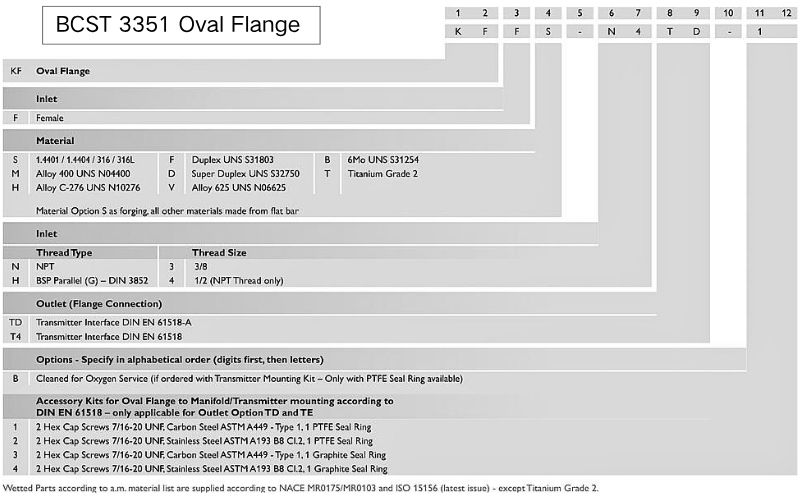
Yes, customization is a key strength of BCST as a manufacturer. If you have unique requirements for materials, connection sizes (e.g., NPT, BSP), or specific pressure ratings, our engineering team is ready to assist. We can design and produce custom 3351 oval flanges tailored to your exact application, providing a perfect solution where standard parts fall short.
9. What industries commonly use these flanges?
BCST 3351 oval flanges are essential components in any industry that relies on differential pressure measurement. This includes Oil & Gas for flow measurement, Chemical Processing for reactor level monitoring, Power Generation for boiler control, and Water & Wastewater treatment for filter monitoring. Any application requiring a robust connection for a DP transmitter benefits from our high-quality flanges.
10. How do I place an order with BCST?
Ordering from the BCST factory is simple. You can contact our sales team directly through the inquiry form on our website, by email, or by phone. Our expert staff will guide you through the selection process, provide a competitive quote with a clear lead time, and ensure your order is processed efficiently. We are committed to providing a smooth and responsive purchasing experience.
 English
 Arabic
 Russian
 French
 Spanish